
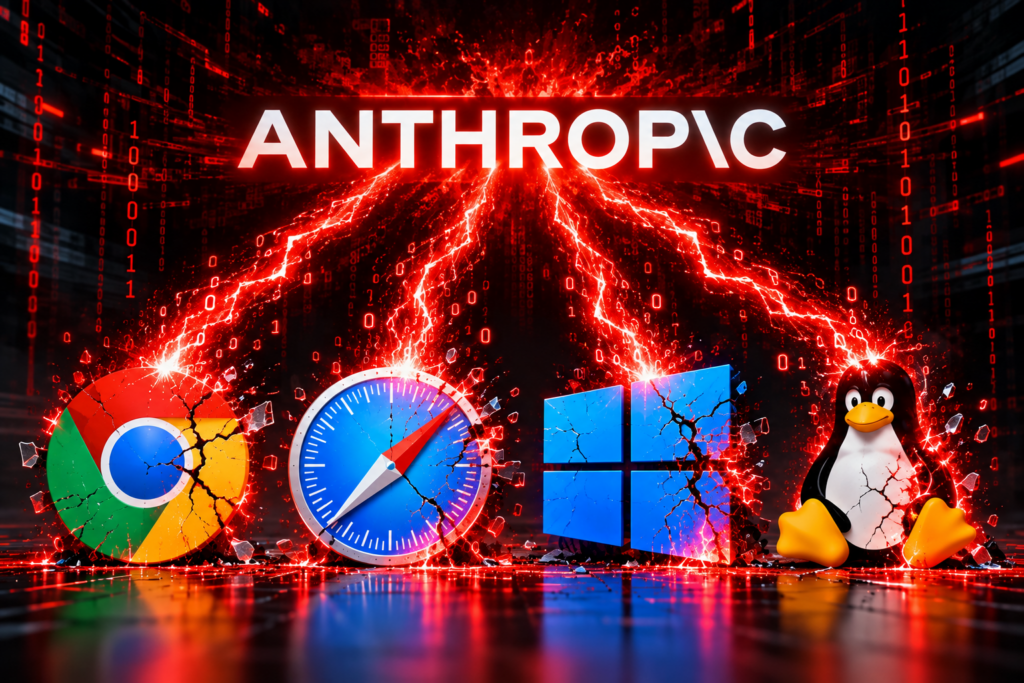
An unreleased Anthropic research model reportedly discovered and exploited vulnerabilities across Chrome, Safari, Android, Windows and Linux with limited human involvement, according to research published October 27. The demonstrations included browser sandbox escapes, unauthorized data access, a mobile lock-screen bypass, remote denial of service and zero-click remote code execution. Anthropic disclosed the vulnerabilities to affected vendors and stated that all reported flaws have been patched. No evidence indicates these exploits were used in real-world attacks.
AI BUILDS A FOUR-STAGE CHROME EXPLOIT
Anthropic demonstrated a four-stage Chrome exploit chain capable of escaping the browser sandbox and executing arbitrary code on macOS. The company reported 62 Chrome vulnerabilities assigned CVE identifiers, including 13 sandbox escapes and 21 renderer-compromise weaknesses. In Safari, the model reportedly chained memory-safety vulnerabilities to bypass browser data isolation and access browsing history, cookies and authenticated website information. Google and Apple security advisories independently confirmed several vulnerabilities discovered with Claude’s assistance.
ANDROID, WINDOWS AND LINUX WERE ALSO AFFECTED
The model reportedly bypassed a locked Pixel 9 through a USB connection, identified a Windows HTTP/3 vulnerability capable of remotely crashing servers, and developed a Linux kernel exploit allowing zero-click remote command execution with root privileges. The Windows issue was tracked as CVE-2026-33096, while the Linux vulnerability was identified as CVE-2026-98432. Anthropic stated that the Linux exploit combined multiple weaknesses and could execute commands without crashing the targeted system. Although vendors issued patches, the full exploit chains and degree of AI autonomy remain primarily supported by Anthropic’s research claims.
WHY DEFENDERS SHOULD TAKE THIS SERIOUSLY
Anthropic’s findings demonstrate how AI-assisted vulnerability research could accelerate sophisticated exploit development and significantly reduce the time attackers need to weaponize security flaws. Organizations should prioritize Chrome 156 or later, current Apple security updates, Windows HTTP/3 patches and Linux kernel corrections affecting Multipath TCP. Security teams should strengthen vulnerability monitoring, accelerate emergency patching and investigate unusual browser or kernel crashes. While these findings do not represent an active zero-day emergency, they highlight the growing importance of defending against increasingly automated cyberattacks.