
Latest Threat Feed

GL.INET CONFIRMS CLOUD SECURITY BREACH USED TO INSTALL MALWARE ON ROUTERS AND KVM DEVICES

GL.iNet has confirmed that attackers exploited its cloud remote-management services to install malware on certain routers and KVM devices. The company identified the vulnerability on November 20 and blocked the exploited cloud access. However, devices already infected may still contain malicious software. GL.iNet recommends installing security firmware updates and checking for the suspicious process crond

GL.INET CONFIRMS CLOUD SECURITY BREACH USED TO INSTALL MALWARE ON ROUTERS AND KVM DEVICES Read More »

Latest Threat Feed

CISA CONFIRMS ACTIVE EXPLOITATION OF SAP NETWEAVER VULNERABILITY, URGES IMMEDIATE PATCHING

The Cybersecurity and Infrastructure Security Agency (CISA) added SAP NetWeaver Enterprise Portal vulnerability CVE-2025-42884 to its Known Exploited Vulnerabilities (KEV) catalog on November 20, 2026, confirming active exploitation of a previously patched security flaw. The vulnerability allows unauthenticated attackers to inject Java Naming and Directory Interface (JNDI) properties or manipulate lookup URLs, potentially exposing or

CISA CONFIRMS ACTIVE EXPLOITATION OF SAP NETWEAVER VULNERABILITY, URGES IMMEDIATE PATCHING Read More »

Latest Threat Feed

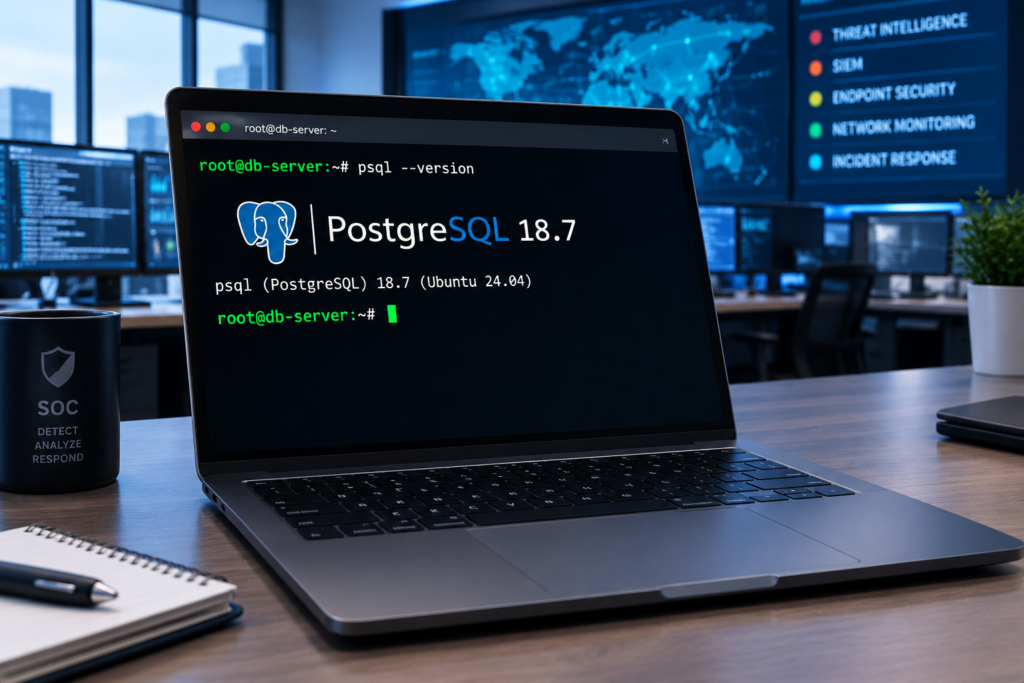
DATABASE SECURITY FLAWS IN POSTGRESQL, MYSQL AND ORACLE ENABLE REMOTE CODE EXECUTION

New research published by Depthfirst researcher Zheng Yu, demonstrates how minimally privileged database accounts can exploit memory-corruption vulnerabilities to execute operating-system commands. The findings examine PostgreSQL, MySQL and Oracle Database, revealing how attackers could bypass traditional permission restrictions without accessing application tables. These findings are researcher demonstrations, not evidence of confirmed widespread exploitation. POSTGRESQL AND

DATABASE SECURITY FLAWS IN POSTGRESQL, MYSQL AND ORACLE ENABLE REMOTE CODE EXECUTION Read More »

Latest Threat Feed

CYDERES UNCOVERS FORTIGATE VPN CREDENTIAL THEFT AND BOTNET OPERATION LINKED TO TCHERBER

Cybersecurity researchers at Cyderes have uncovered a cybercriminal operation involving stolen enterprise VPN credentials, malware distribution, and botnet infrastructure linked to the underground handle “tcherber.” The investigation identified more than 500 FortiGate VPN credential entries, with recovered logs confirming successful connections to multiple victim environments during May and June 2026. Researchers also discovered a Go-based

CYDERES UNCOVERS FORTIGATE VPN CREDENTIAL THEFT AND BOTNET OPERATION LINKED TO TCHERBER Read More »

Latest Threat Feed

JAVA4SHELL VULNERABILITY EXPOSES OPENJDK APPLICATIONS TO REMOTE CODE EXECUTION

New cybersecurity research published on November 17, 2026, reveals additional technical details about CVE-2026-114938, a critical OpenJDK vulnerability dubbed Java4Shell by researchers at Calif. The flaw affects OpenJDK’s hardware-accelerated Base64 decoder and could allow unauthenticated remote code execution under specific conditions. Researchers demonstrated exploitation against tested configurations of Jenkins, Atlassian Jira, Confluence, Keycloak, JFrog Artifactory,

JAVA4SHELL VULNERABILITY EXPOSES OPENJDK APPLICATIONS TO REMOTE CODE EXECUTION Read More »

Latest Threat Feed

ZOOM, IKEA, HSBC AMONG 178 WEBSITES COMPROMISED IN MAJOR MALWARE ATTACK

Cybersecurity researchers uncovered a widespread supply chain attack on November 16, 2026, involving malicious JavaScript distributed through the Optimizely Web experimentation platform. The campaign affected websites belonging to at least 178 organizations, including Zoom, IKEA, HSBC, Salesforce, CNN, BBC, GitLab, and Equifax. Security researcher Scott Helme of Report URI identified 188 infected scripts after examining

ZOOM, IKEA, HSBC AMONG 178 WEBSITES COMPROMISED IN MAJOR MALWARE ATTACK Read More »

Latest Threat Feed

FANDANGO SECURITY BREACH EXPOSES CUSTOMER PAYMENT CARD INFORMATION

Fandango has notified customers of a cybersecurity incident involving its online ticketing checkout page that potentially exposed sensitive payment information between October 8 and October 11, 2026. According to a customer notification filed with the California Attorney General, an unauthorized party may have accessed payment card numbers, CVV security codes, expiration dates, billing ZIP codes,

FANDANGO SECURITY BREACH EXPOSES CUSTOMER PAYMENT CARD INFORMATION Read More »

Latest Threat Feed

LA POSTE CONFIRMS MAILEVA CYBERATTACK EXPOSING DATA OF 22 MILLION PEOPLE

La Poste Groupe confirmed on November 15, 2026, that a cyberattack targeting its document-delivery subsidiary, Maileva, exposed personal information belonging to approximately 22 million people. The attack occurred in mid-September and compromised first names, surnames, and postal addresses of individuals receiving correspondence from Maileva’s business and institutional customers. Many affected individuals did not have direct

LA POSTE CONFIRMS MAILEVA CYBERATTACK EXPOSING DATA OF 22 MILLION PEOPLE Read More »

Latest Threat Feed

CONNECTWISE ISSUES URGENT SCREENCONNECT SECURITY ADVISORY FOLLOWING CYBERATTACKS ON MSPs

ConnectWise has issued an urgent security advisory following reports of unauthorized access to ScreenConnect environments used by managed service providers (MSPs). The attacks, discovered on November 11, 2026, involved threat actors deploying unauthorized remote-access software onto customer devices. Cybersecurity firm Huntress initially identified six compromised MSPs and more than 286 affected endpoints across 47 organizations,

CONNECTWISE ISSUES URGENT SCREENCONNECT SECURITY ADVISORY FOLLOWING CYBERATTACKS ON MSPs Read More »

Latest Threat Feed

MICROSOFT DISCOVERS LAZARUS AI BACKDOOR THAT TURNS MODELS INTO SLEEPER AGENTS

Microsoft researchers have demonstrated a new AI security technique called Lazarus that can turn artificial intelligence models into sleeper agents by modifying fewer than ten dormant neurons. The attack requires no traditional model retraining and allows compromised AI systems to operate normally until a specific trigger activates a hidden malicious command. If the affected AI

MICROSOFT DISCOVERS LAZARUS AI BACKDOOR THAT TURNS MODELS INTO SLEEPER AGENTS Read More »

Latest Threat Feed