
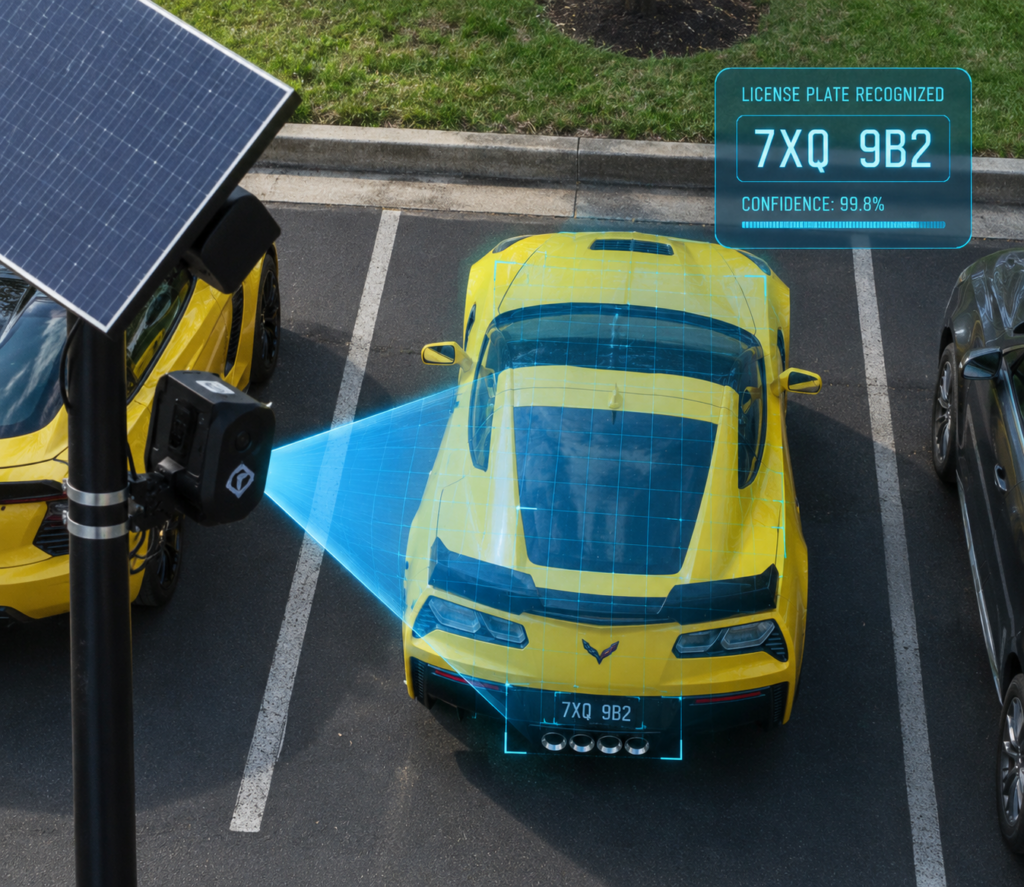
Flock cameras are automated license plate recognition (ALPR) systems designed to capture and analyze vehicles traveling through monitored areas. Unlike traditional surveillance cameras that primarily record continuous video, these license plate readers capture vehicle images and use machine learning to identify license plates and other vehicle characteristics.
How Flock Cameras Work
When a vehicle passes a Flock camera, the system captures images that can be analyzed for information such as the license plate, vehicle make, model, color, body type, and certain distinguishing features. Each vehicle detection can also be associated with a timestamp and camera location.
Law enforcement agencies can search ALPR data during investigations and receive alerts when detected license plates match designated databases, such as those containing information about stolen or wanted vehicles. The technology focuses on identifying vehicles rather than using facial recognition to identify drivers or passengers.
Privacy Concerns Around ALPR Cameras
The expansion of ALPR networks has raised privacy concerns about how vehicle-location information is collected, stored, searched, and shared. Because license plate detections can reveal when and where a vehicle was observed, critics have questioned how widespread ALPR networks could potentially be used to track people’s movements over time.
As ALPR technology becomes more common in communities, businesses, and law enforcement operations, the debate continues over how to balance its value for public safety and criminal investigations with privacy, transparency, data security, and oversight.