
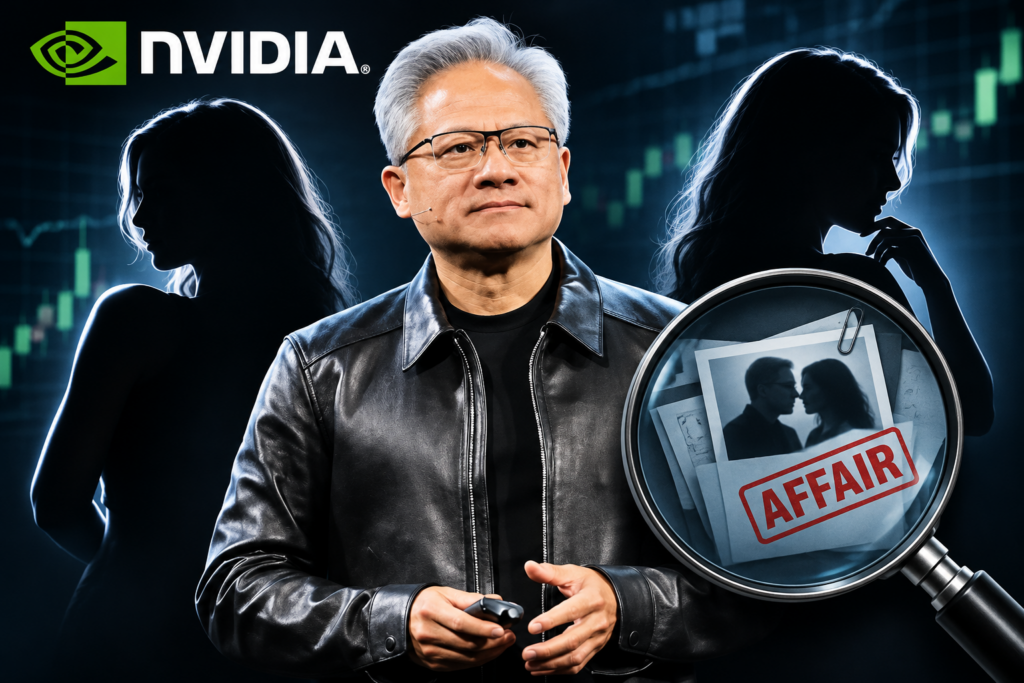
Nvidia is facing a major leadership crisis following reports of extramarital affairs involving longtime CEO and co-founder Jensen Huang, raising concerns about corporate governance, national security, and the company’s future heading into 2027. The controversy intensified after reports linked Huang to a former executive at Singapore-based Megaspeed International who was suspected by U.S. intelligence officials of having connections to Chinese intelligence. Nvidia’s board launched an independent investigation, while Huang acknowledged marital infidelity. The company stated that it had no reason to believe corporate secrets or national security information had been compromised. The controversy has shaken investor confidence and placed renewed scrutiny on the management of one of the world’s most influential artificial intelligence chipmakers.
NVIDIA APPOINTS INTERIM LEADERSHIP AMID CEO DEPARTURE
On November 12, 2026, reports indicated that Jensen Huang resigned as Nvidia’s chief executive following mounting pressure surrounding the controversy and the board’s investigation. Nvidia Chief Financial Officer Colette Kress was named interim CEO, while longtime board member Harvey C. Jones assumed the newly established chairman position. Huang’s departure represents a significant turning point for the semiconductor company he co-founded in 1993. Nvidia’s management structure has historically depended heavily on Huang, with dozens of senior executives reporting directly to him. The sudden leadership transition raises questions about Nvidia’s ability to maintain its aggressive AI development strategy, global semiconductor partnerships, and competitive position without its longtime leader.
WHAT NVIDIA’S LEADERSHIP CHANGES COULD MEAN FOR 2027
Heading into 2027, Nvidia faces the challenge of establishing permanent executive leadership while maintaining momentum in artificial intelligence, data centers, robotics, and advanced GPU development. The board is expected to evaluate internal and external candidates as investors monitor whether management changes could affect product roadmaps, semiconductor supply agreements, and relationships with major technology companies. Nvidia must also navigate growing U.S.-China trade restrictions, regulatory scrutiny, and competition in the AI chip industry. Although the leadership controversy introduces uncertainty, the company’s established technology ecosystem and demand for AI infrastructure remain important strengths. Nvidia’s ability to restore investor confidence, strengthen corporate oversight, and establish a clear long-term management strategy could determine its direction throughout 2027.