
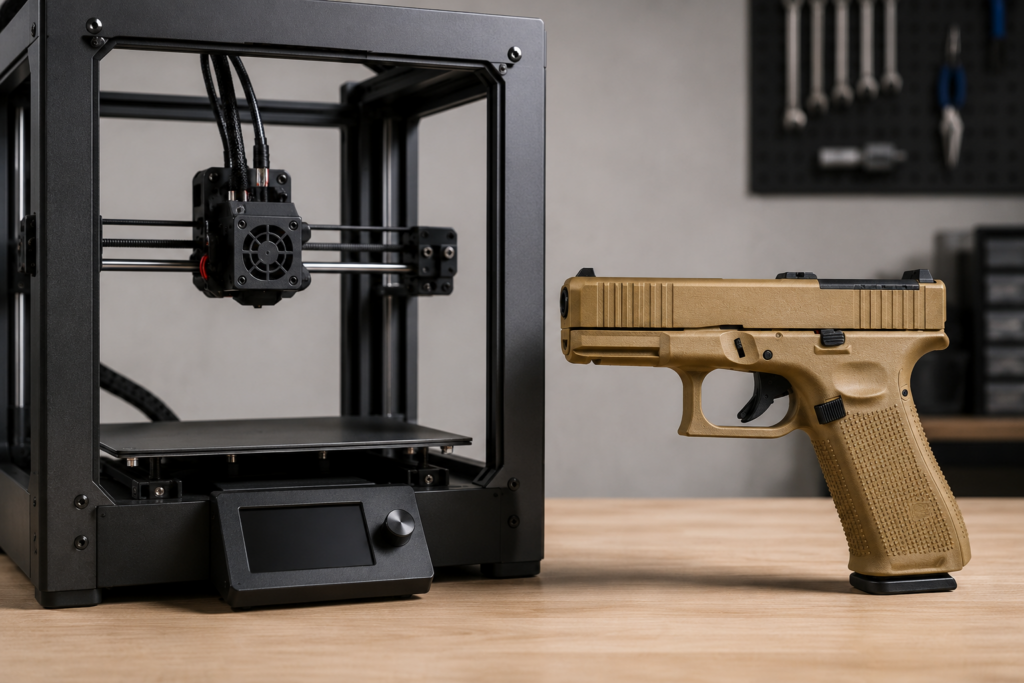
A newly developed software tool is raising concerns about whether security measures intended to prevent 3D printers from producing firearms can keep pace with attempts to circumvent them.
The tool, called “Hochulization,” was developed by Defense Distributed founder Cody Wilson, whose organization distributes digital firearm designs through its DEFCAD platform. Its emergence follows a New York law requiring new 3D printers to incorporate technology capable of detecting and blocking certain firearm-related files.
One potential method for enforcing such restrictions involves comparing a file’s cryptographic hash against a database of prohibited designs. However, reports indicate Wilson’s software can alter a file enough to produce a different hash while preserving the underlying design, potentially preventing basic hash-matching systems from recognizing it.
Wilson has said the software will be offered through DEFCAD and eventually released as open-source software.
The development highlights a broader cybersecurity challenge: safeguards that depend primarily on static file signatures can become less effective when files are modified. As 3D-printing technology becomes increasingly accessible, regulators and manufacturers may face growing pressure to develop more sophisticated detection methods.